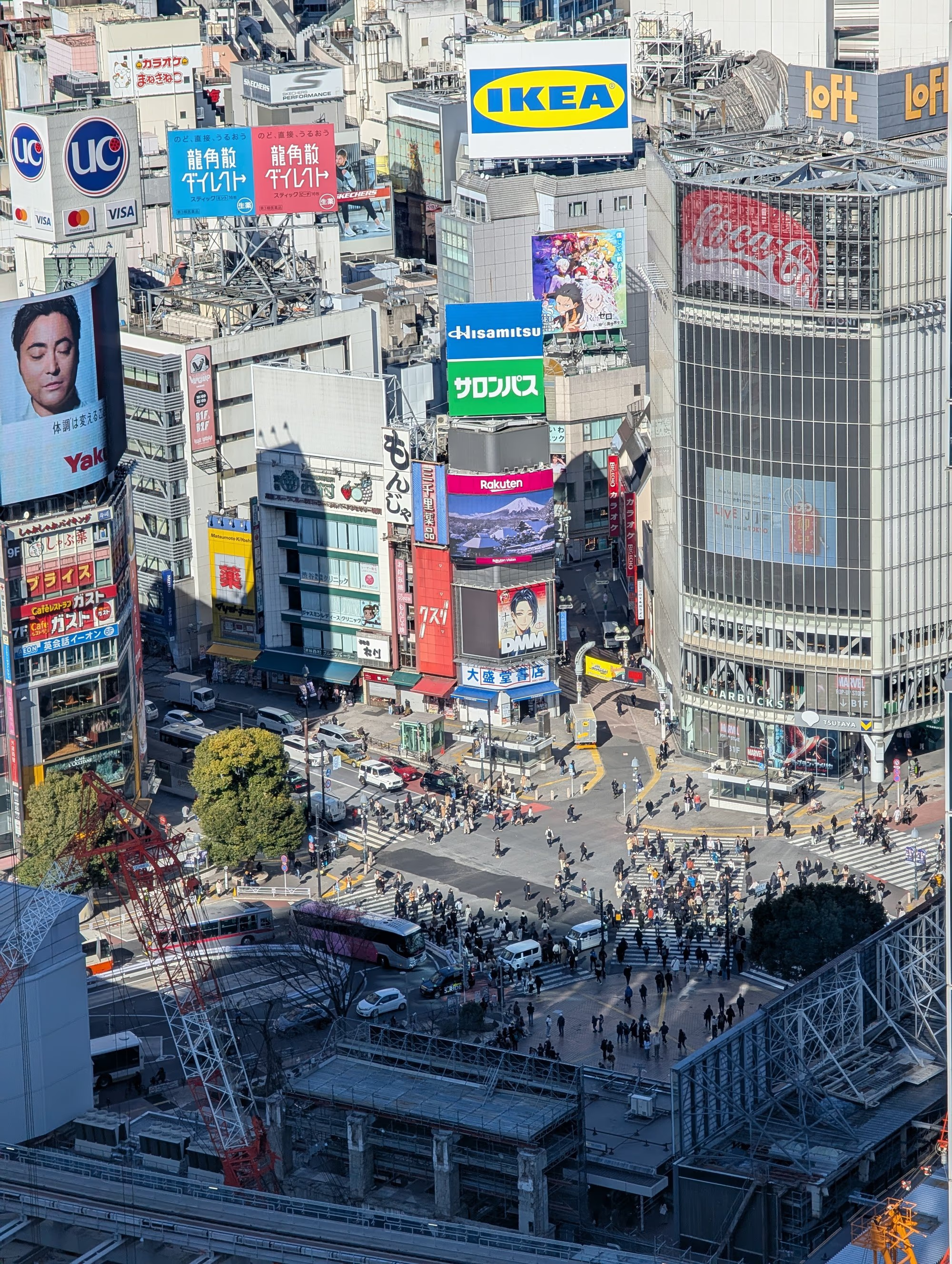
There is a structure to Shibuya worth understanding before you plan anything.
Shibuya is a free district with a few paid points placed in it. Walking around costs nothing. What you pay for is height and organised experiences. So budgeting comes down to a single decision: what do you pay for?
Things that cost nothing
These alone will fill half a day.
1. Walk the Scramble Crossing — The centre of the district. One signal cycle is about two minutes, and diagonals are allowed. → Full guide
2. Look down from the station walkway — The most practical free viewpoint, near eye level and facing pedestrians head-on. → Viewpoints compared
3. The Hachikō statue — East of the Crossing. Around 07:00 on a weekday you can photograph it without anyone in shot. → Details
4. Center-gai — North-west from the Crossing. A pedestrian street dense with food and clothing.
5. Miyashita Park’s rooftop lawn — Free public space, and one of very few places to sit. → Shopping guide
6. SHIBUYA109 from outside — At the foot of Dōgenzaka. The building is a landmark whether or not you go in.
7. Pokémon Center and Nintendo TOKYO — Sixth floor of Shibuya Parco. Free entry, browsing allowed. → Details
8. Meiji Jingū — Free to visit. Walking distance from Harajuku Station, reachable on foot from Shibuya. Empty first thing. → Details
9. Yoyogi Park — Adjoining Meiji Jingū. Large, quiet, free.
10. “Myth of Tomorrow” — Tarō Okamoto’s vast mural in the Shibuya Mark City passage.
11. The Crossing after sunset — The best twenty minutes of the day. → The Crossing at night
12. Walk Nonbei Yokocho — Worth doing for the atmosphere even if you don’t drink.
Things worth paying for
Where the budget decision sits.
13. Shibuya Sky (from ¥2,700) — 229 m, with an open-air rooftop. The highest-rated paid experience in Shibuya and the hardest to book. Two-week window. → Getting tickets
14. MAG8 (much cheaper) — Rooftop of MAGNET by SHIBUYA109, looking almost straight down on the Crossing. One drink included. → Viewpoints
15. Street go-karts — Requires a Japanese licence or an IDP. One hour. Five operators. → Licence rules and comparison
16. Sumo show — 90 minutes. Sumo without matching a tournament date. Rated 5.0. → Details
17. Tea ceremony or matcha workshop — From 45 minutes. Indoors and weather-proof. → Details
18. Chopstick making — One hour, and you take the result home. Works with children. → Details
19. Izakaya bar crawl — Three hours, three or four venues. The way into places you would not enter alone. → Details
20. Guided walking tour — The Crossing, back lanes and alleys with commentary. Evening versions sometimes include deck entry. → Choosing a tour
Two paid things a day, maximum
This is the most useful planning rule here.
Everything in Shibuya runs from 45 minutes to three hours. Book three and the day is consumed by moving between them and waiting, and you never actually walk the district.
Combinations that work
- One viewpoint + one experience
- One viewpoint + one guided tour
- Two experiences (a wet day)
Half a day (4 hours)
- 13:00 Hachikō and the Scramble Crossing
- 13:30 Walk Center-gai to SHIBUYA109
- 14:30 Break at Miyashita Park
- 15:30 Shibuya Parco 6F — Pokémon Center, Nintendo TOKYO
- 17:00 Shibuya Sky, sunset slot
A full day (9 hours)
- 09:00 Meiji Jingū, straight after opening, empty
- 10:30 Harajuku and Takeshita-dōri
- 12:00 Back to Shibuya for lunch
- 13:30 One experience — karts, tea ceremony or chopstick making
- 15:30 SHIBUYA109, Center-gai, Miyashita Park
- 17:00 Shibuya Sky, sunset slot
- 19:00 Nonbei Yokocho or an izakaya
- 21:00 The Crossing after dark
All on foot, except one JR stop for Meiji Jingū and Harajuku if you want to save time.
Budget
| What | Roughly |
|---|---|
| Walking only | ¥0 (excluding food) |
| Observation deck only | ¥2,700–3,400 |
| Deck + one experience | ¥8,000–15,000 |
| Deck + guided evening tour | ¥15,000–20,000 |
| Food, three meals | ¥3,000–8,000 |
Experience prices vary by platform and season. Always confirm on the booking page.
Three constraints to plan around
1. Shibuya Sky opens two weeks ahead. It is the only element of your itinerary with a hard, narrow booking window. Lock it in, then build around it.
2. Museums close on Mondays. If your Shibuya day is a Monday, drop museums and use the Crossing, the deck and shopping instead.
3. Independents rest between 14:00 and 17:00. Street-level restaurants may be closed. Use retail buildings or a booked experience for that window.
What to swap in when it rains
The Shibuya Sky rooftop closes for strong wind, rain and approaching storms. The indoor 46F gallery stays open, but if the rooftop was the point, moving your date is worth it.
Still works in the rain
- Museums — except Mondays
- Cooking classes, tea ceremony, chopstick making
- The sumo show
- Shopping — station-connected buildings keep you dry
- The Crossing in the rain — umbrellas from above make a better photograph
Rain is not Shibuya’s enemy. The Crossing is more interesting in it.
Mistakes people make
- Hunting for deck tickets at the last minute — with a two-week window, evening slots will be gone
- Missing the go-kart licence rule — IDPs cannot be issued inside Japan
- Standing still in the middle of the Crossing — it blocks everyone behind you
- Booking too many paid activities — leaving no time to walk
- Shopping first — you cannot take bags onto the Shibuya Sky rooftop
- Drinking in the street — restricted by ordinance near the station
Going beyond Shibuya
Within a walk or one to two stops sit districts with very different characters.
- Harajuku and Takeshita-dōri — one stop, youth culture
- Omotesandō — 15 minutes on foot, luxury brands and architecture
- Meiji Jingū and Yoyogi Park — walkable, forest and quiet
- Ebisu — one stop, grown-up food and a photography museum
- Shinjuku — two stops, a bigger entertainment district
See what’s near Shibuya and Shibuya or Shinjuku.
Sources
Shibuya Sky prices, hours and the sales window come from the official Shibuya Scramble Square ticket page. MAG8 details come from the official MAGNET by SHIBUYA109 page, and the street-drinking ordinance from Shibuya City. All checked on 3 September 2026.
Experience prices and ratings are the values shown on each booking page and change. We do not sell tickets.