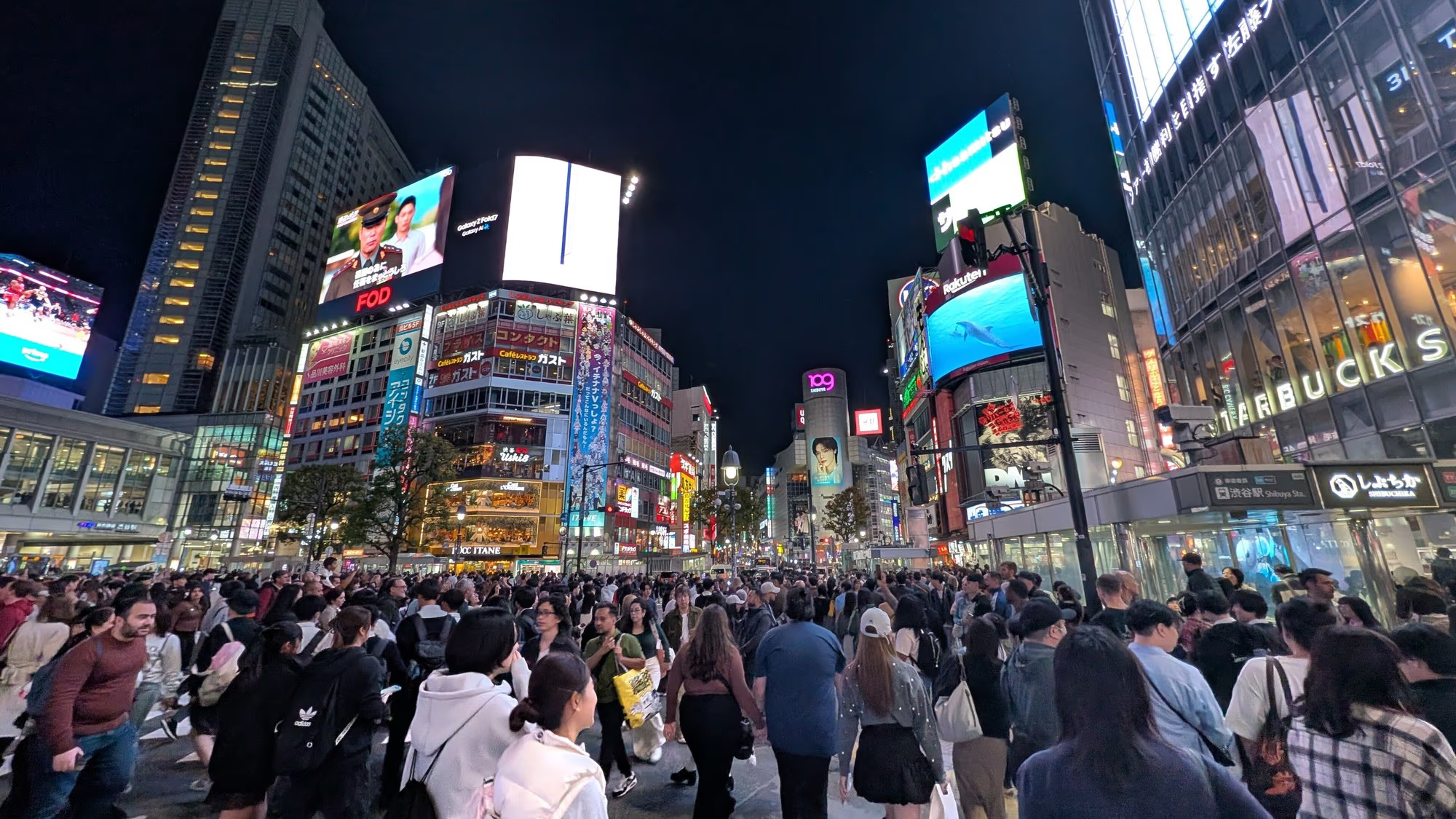
The Crossing at night is not simply “wait until it’s dark”. There is a best twenty minutes, and if you miss it you get an ordinary night photograph.
Blue hour
Just after sunset the sky has not yet gone black. For a short window, deep blue sky and freshly lit neon exist at the same time.
This matters because once it is properly night, the sky goes black and the contrast collapses. Bright signs against pure black looks striking in person and flat in a photograph.
For roughly twenty minutes, the sky and the street are balanced in brightness.
Tokyo’s sunset moves a great deal across the year.
| Period | Approximate sunset | Blue hour |
|---|---|---|
| Late June – early July | 18:50–19:00 | 19:00–19:20 |
| April / September | 17:50–18:00 | 18:00–18:20 |
| October / March | 17:20–17:40 | 17:35–17:55 |
| December – January | around 16:30 | 16:35–16:55 |
In winter the peak arrives before 17:00. “It’s night, so we’ll go at seven” misses it completely.
Hour by hour
The hour before sunset — Signage is not on yet. Plenty of people, no colour. Use this time to move or eat, and shoot later.
Sunset to +20 minutes — The real thing. Concentrate everything here.
+20 minutes to 21:00 — Full night. Black sky, screens only. Density stays high. This is the high-contrast, cyberpunk-looking hour.
21:00–23:00 — On Friday and Saturday this is where it peaks, as people come out of restaurants. On weeknights numbers start to fall.
After the last trains — Sharply fewer people, but not zero. The screens stay on, so this is the only time you can get something close to an empty Shibuya. Just make sure you know how you are getting home.
Rain is an advantage
For the Crossing at night, worse weather means better conditions.
- During rain — from above, umbrellas turn the crowd into a field of colour
- Just after rain — the wet road mirrors the signage; light sources double
- Drizzle — light diffuses and the whole street softens
A forecast that says rain clearing in the evening means that evening is the one to use. And on days when the Shibuya Sky rooftop closes for weather, moving your plan down to street level is the right call.
Shooting from above at night
Options are limited after dark.
MAG8 (roof of MAGNET by SHIBUYA109) — Open until 22:00, last entry 21:30. Near-overhead angle on neon-lit pedestrian flow, one drink included. The clearest night composition available.
Shibuya Sky — Open until 22:30, last entry 21:20. A night view from 229 m, with the Crossing small in frame. This is where you shoot the sea of lights. See sunset and night slots.
Shibuya Station walkway — Free, usable until the last trains, and close to eye level facing oncoming pedestrians.
Practical shooting notes
With tripods off the table, everything has to work handheld.
- Crowd as flowing lines → phone night mode, or a longer shutter with the camera braced against a railing
- A frozen face or moment → night mode off, raise ISO, shorten the shutter
- Signage colour → underexpose slightly; shooting bright blows the colours out
- Where to stand → along the railings at the corners, which is one of the few places you can brace without blocking anyone
One signal cycle is about two minutes. Plan on three or four.
Things to be careful about
Street drinking is restricted. Shibuya City’s ordinance covers the area around Shibuya Station. Following an amendment effective 1 October 2024, it applies year-round from 18:00 to 05:00, not just during Halloween and New Year. Drink inside.
Touts. Towards Dōgenzaka and Maruyamachō, numbers increase late. Do not follow anyone. This is the standard route into disputes about advertised versus actual prices.
Pickpockets. Keep your bag in front of you in dense crowds, particularly around 23:00 on Friday and Saturday.
Last trains. JR and the metro finish some time after midnight. If you intend to stay late, decide how you are getting back first.
Don’t stop at the Crossing
The intersection is the start, not the destination. Shibuya’s night gets interesting three to five minutes’ walk into the side streets.
- Nonbei Yokocho — north-east of the station, a narrow lane of tiny bars along the tracks
- Miyashita Park — rooftop park above a dining complex; some venues run late
- The lanes behind Center-gai — calmer, more independent restaurants
- Maruyamachō — up the hill, live music venues and clubs
These are covered in Shibuya nightlife and the izakaya bar crawl. Several of them are far easier to enter with a guide.
Sources
For the street-drinking ordinance, see Shibuya City’s ordinance page. MAG8 hours are from the official MAGNET by SHIBUYA109 page and Shibuya Sky hours from the official Shibuya Scramble Square site, both checked on 3 September 2026. Sunset times are approximate figures for Tokyo.