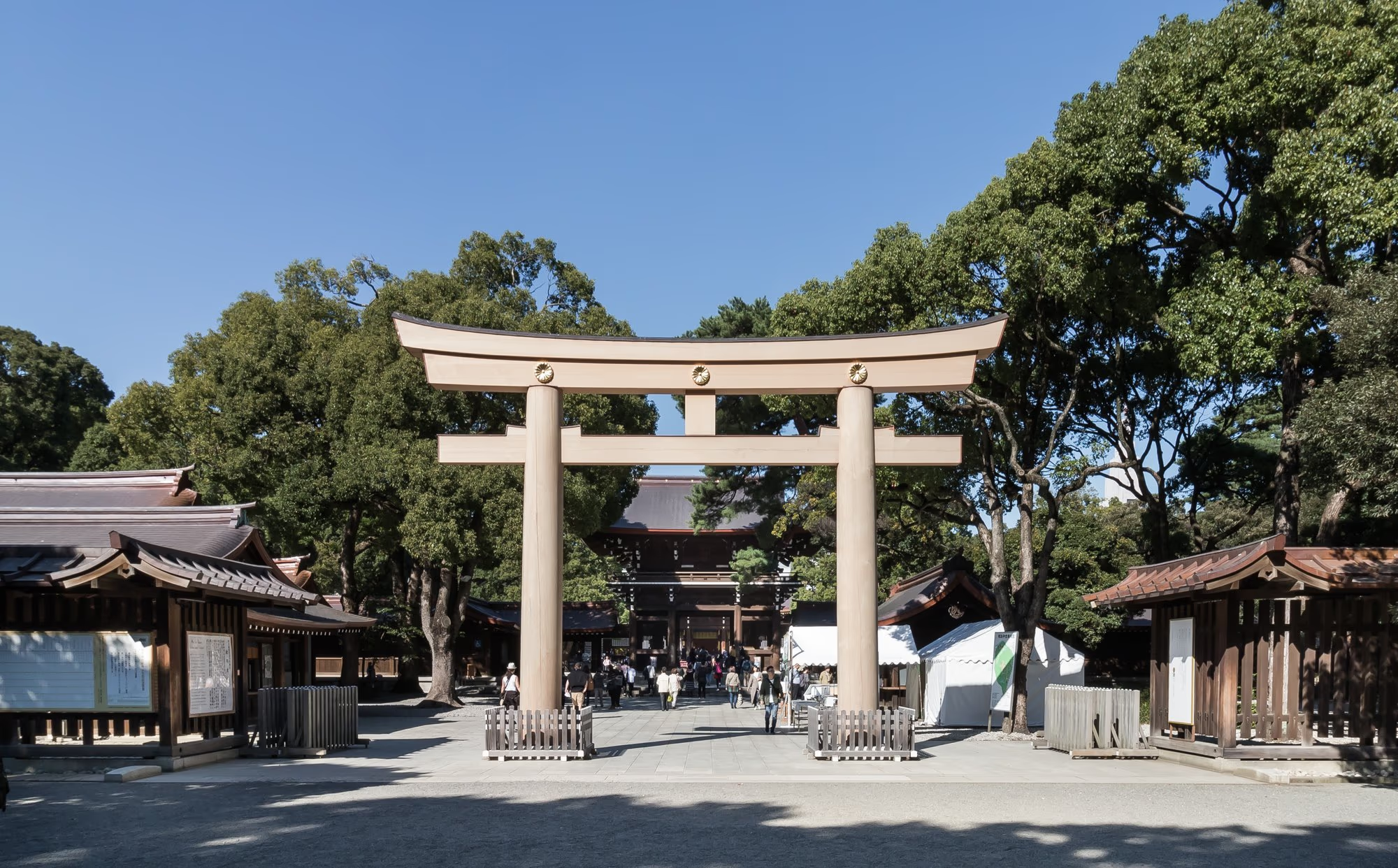
The thing that surprises people most about Shibuya is that a deep forest sits fifteen minutes’ walk from that intersection.
The grounds of Meiji Jingū cover roughly 70 hectares. The forest was planted rather than natural, but a century on it behaves like the real thing. In the middle of a capital city, you get the smell of trees and the sound of gravel and nothing else.
Meiji Jingū
Getting there
In Yoyogi, Shibuya City. The nearest station is JR Harajuku, whose exit opens directly onto the south approach.
- On foot from Shibuya Station — about 20 minutes
- By JR from Shibuya — one stop to Harajuku, about 2 minutes
- Tokyo Metro — Meiji-jingumae ‘Harajuku’ station
You can walk from Shibuya, but the main hall is another ten minutes beyond the entrance. If time is tight, take the train.
Opening hours
It opens at sunrise and closes at sunset, varying with the season, and monthly times are published on the official site.
That is a real constraint. In summer it may open before five and close around seven in the evening; in winter, from around 6:40 to about four. A swing of more than two hours.
There is no evening access. Check the times for the month you are visiting.
Cost
Visiting the shrine is free.
Two things are not:
- Meiji Jingū Gyoen — the inner garden, known for its irises in season
- Meiji Jingū Museum — the treasure collection
Amounts are on the official site; we do not publish figures here.
Why early matters
This is the single most useful piece of advice about Meiji Jingū.
Around seven in the morning, just after opening, the grounds are essentially empty. All you hear is your own footsteps on the gravel and the light coming through the trees. The same path at eleven is full of groups.
It is the one thing in Shibuya genuinely worth getting up for. Not after a night out — but somewhere in your itinerary, give one morning to it.
How far you walk
About ten minutes from the entrance to the main hall via the south approach, on gravel throughout. Proper shoes are essential; heels and sandals are not suitable.
The grounds are large and walking the whole thing takes over an hour. A visit to the main hall and back is about forty minutes.
Shrines close to Shibuya Station
If Meiji Jingū will not fit, there are shrines within walking distance of the station.
Konnō Hachimangū
About five minutes on foot from Shibuya Station. An old foundation said to be connected with the origin of the name Shibuya.
Visitors are almost entirely absent. The grounds are small and ten minutes covers them. The fact that this exists in the middle of Shibuya says something about the layers of the district’s history.
Yoyogi Hachimangū
Two stops from Shibuya on the Odakyu line or the Tokyo Metro. On a small hill, in a residential neighbourhood.
Not developed for tourism; the people there are mostly locals. If you want to see the part of Shibuya that is not an attraction, this is a better bet.
Shibuya Hikawa Shrine
In Higashi, Shibuya City, within walking distance of the station and similarly quiet.
Etiquette
Less a set of rules than a way of showing respect for the place.
- Bow before the torii — before entering the grounds
- Keep to the side of the approach — the centre is understood as the deity’s path
- Purify at the water basin — right hand takes the ladle to rinse the left, swap to rinse the right, then pour into the left hand to rinse your mouth
- At the hall: two bows, two claps, one bow — bow twice, clap twice, pray, bow once more
- Bow again on the way out — turning back at the torii
You do not need to execute all of it perfectly. Watching what others do and following is enough.
Photography — generally permitted in the grounds, though not inside the main hall or during ceremonies. Follow the notices.
With Yoyogi Park
The eastern side of Meiji Jingū adjoins Yoyogi Park, and walking both together is efficient.
- Meiji Jingū — quiet, gravel, forest
- Yoyogi Park — grass, runners, weekend events
Entirely different in character, and adjacent. Visiting the shrine, resting in the park, then continuing to Takeshita-dōri in Harajuku is the standard route.
When it gets busy
The first three days of January — Meiji Jingū draws some of the largest first-visit crowds in Japan, with waits that can run to hours. Arriving then expecting a quiet forest is a different experience entirely.
November (Shichi-Go-San) — More families, and queues for photographs, though not overwhelming.
Iris season in June — The inner garden gets busy.
Outside those, weekday mornings are quiet year-round.
Sources
Opening times, admission for the paid facilities and rules within the grounds all change. Check Meiji Jingū’s official site before visiting.
For the history and background of individual shrines, consult their own published information and Shibuya City’s material. This is an independent visitor guide with no connection to any religious institution.