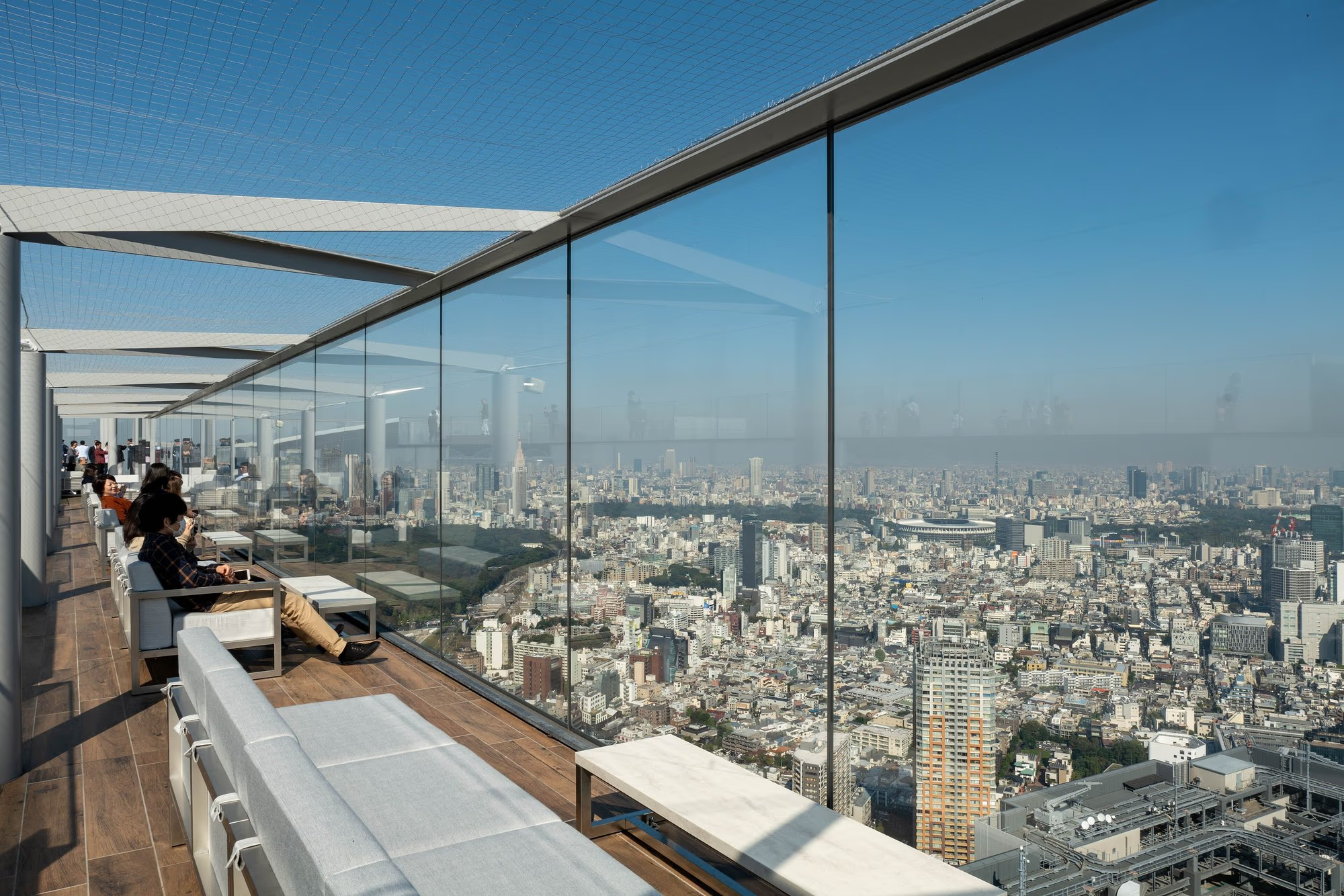
The valuable part of a Shibuya Sky visit is roughly forty minutes long: the stretch where the sky goes blue, then orange, then deep navy. Whether you catch it comes down entirely to which entry slot you book.
Why “an evening slot” isn’t good enough
Most people pick an evening time by instinct and get it wrong, because Tokyo’s sunset moves so much.
| Period | Approximate sunset | Slot to book |
|---|
| Late June – early July | 18:50–19:00 | around 18:00 |
| April / September | 17:50–18:00 | around 17:00 |
| October / March | 17:20–17:40 | around 16:30 |
| December – January | around 16:30 | around 15:30 |
Book “18:00” in December and it is already fully dark when you arrive. Book “16:00” in June and the sun has not moved by the time you leave.
Add ten to fifteen minutes for ticket checks, the bag check, the escalators and the lockers. That is part of the calculation, not an afterthought.
How to use the forty minutes
From the first colour to full darkness you have around forty minutes. Deciding your movements in advance means you do not miss anything.
Until 20 minutes before sunset — Claim a position along the western railing, facing Shinjuku. This is the most contested part of the deck, so get there early.
The ten minutes either side of sunset — Peak colour. Almost everyone is shooting west.
10–20 minutes after sunset — Blue hour. Blue still in the sky, city lights coming on. Photographically the strongest window of the entire day. Move east now — Tokyo Tower against a blue sky is the shot.
30 minutes after sunset onwards — Full night. Black sky, city lights only. People start to leave, so if crowds bother you, this is when it improves.
The crowd peak, and how to dodge it
The rooftop is busiest from thirty minutes before sunset to thirty minutes after. Timed entry caps the number of people in the building, but they all want the same western railing, so only that side saturates.
Three countermeasures:
- Join the entry queue ten minutes before your slot. Within the same time band, you get out first.
- Skip 46F on the way up. The exhibits and shop can wait.
- Move east after sunset. The western side clogs; the eastern side rarely does.
THE ROOF: sitting down for it
The rooftop has a bar, THE ROOF SHIBUYA SKY. Sofa seating needs a dedicated ticket that bundles entry, drinks and snacks.
- Standard set: ¥7,000
- Champagne set: ¥8,000
- Season: 29 April – 25 December 2026
- Minimum two people; no under-20s, even accompanied
- Sold on the same fourteen-day window as everything else
Two standard ¥3,400 tickets already come to ¥6,800, so ¥7,000 with a seat and a drink is not really a premium. It makes obvious sense in seasons where you are waiting a long time for the sun to go down, or if standing for an hour is not appealing.
Night only? Book after 20:00
If you can live without the sunset, a 20:00-plus slot is clearly the better deal.
- The sunset crowd has gone and the rooftop thins out
- Availability is often there at short notice
- The city lights are fully on; as a night view, nothing is missing
The price is the same ¥3,400, but the experience improves through sheer lack of people. Last entry 21:20, closing 22:30.
The view from above isn’t the whole night
The city seen from 229 m and the city seen from the pavement are different experiences. Coming down from Shibuya Sky and walking the Crossing changes the resolution completely.
Many evening tours combine Shibuya Sky entry with a street walk, which also makes them a fallback when standalone tickets have sold out.
Sources
Prices, opening hours, last entry, and THE ROOF’s contents and season all come from the official Shibuya Scramble Square ticket page, checked on 3 September 2026. Sunset times are approximate figures for Tokyo — check the exact time for your own date.
This site sells no tickets and is not connected to Shibuya Sky or Shibuya Scramble Square.
03
Guide tips
Look up the actual sunset time first
Tokyo's sunset ranges from about 19:00 in late June to about 16:30 in early December — a swing of nearly two and a half hours. Booking 'an evening slot' by feel gives you full darkness in winter and broad daylight in summer.
Go straight up, then come back down for the exhibits
The sky only changes colour for about forty minutes. The 46F displays and shop are still there afterwards. Reversing the usual order buys you ten extra minutes outside during the good light.
Claim a spot on the west side first
The sun sets towards Shinjuku, to the north-west and west. Secure a position along the western railing, then move east after sunset for Tokyo Tower silhouetted against the last of the blue.
Take a layer even in summer
229 m up in open air, the wind is strong and it feels several degrees colder than the street. Whether you last twenty minutes or an hour comes down to what you're wearing.
If sunset is gone, invert your evening
Book a daytime slot at ¥2,700 for the clear long-distance view, then spend the evening at street level. The Crossing and the yokocho alleys have a far higher density of neon than anything you see from 229 m.