Shibuya Tickets shibuyatickets.tokyo Browse Shibuya toursBrowse tours

Shibuya Station, Hachikō exit · Free

The Hachikō statue

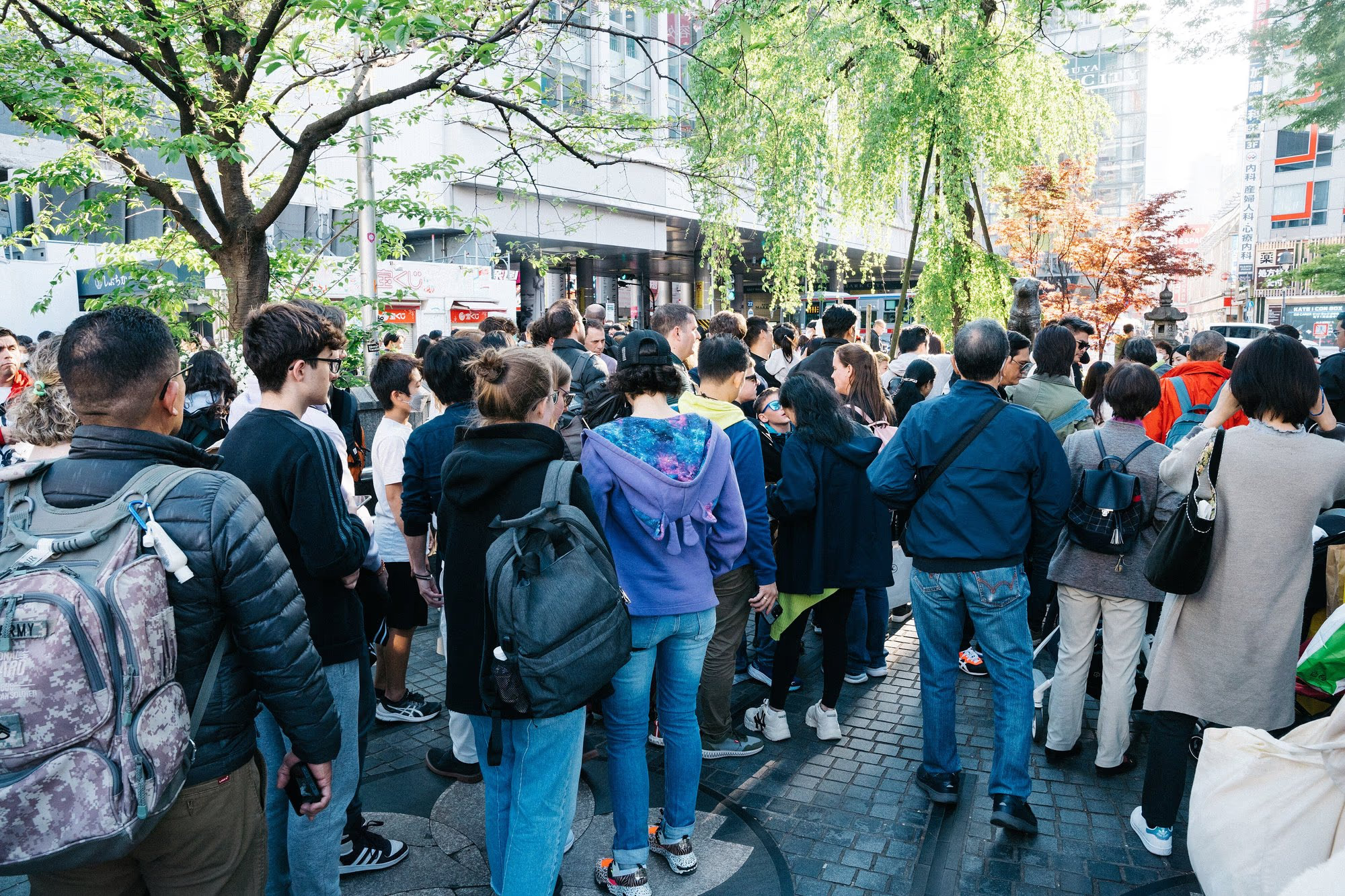
Shibuya's most famous bronze is also a working meeting point that people still actually use. That is exactly why it is always surrounded.

Last updated: 2026-09-03 Reading time: 3 min Disclaimer. This is an independent visitor guide to Shibuya. It is not the official website of SHIBUYA SKY, Shibuya Scramble Square or any other venue, and it is not affiliated with them. We do not sell tickets. Booking buttons open Klook or GetYourGuide. Prices and opening hours change — always confirm on the official site before you buy.


Popular Shibuya activities

Powered by GetYourGuide

Quick summary

Location
Hachikō exit forecourtLeft as you leave the JR Hachikō gates, before the Crossing
Cost
FreeOutdoor public square, visible 24 hours
Easiest photo
Weekdays 07:00–08:00Essentially no queue
Busiest
Weekends 12:00–20:00A queue of people waiting to photograph it
Time to allow
5–15 min
Breed
Akita

The Hachikō statue is the smallest attraction in Shibuya. You are finished with the bronze itself in a few minutes. What it is genuinely good for is being the right place to begin.

Where it is

In the forecourt outside the Hachikō exit of Shibuya Station. Leave the JR Hachikō ticket gates, look left, and it is about fifty metres away, before you reach the Crossing. There is very little scope for getting this wrong.

If you come out of a different exit, follow signs for “Hachikō exit”. Shibuya Station is complicated, but that particular sign is posted from every direction. More in getting there.

Why people gather here

The first statue was erected in 1934; the current one is a post-war replacement. The story of an Akita who kept waiting at the station for his owner is widely known in Japan and has been filmed more than once.

More important than its value as a sight is that the statue still functions as a meeting point. “In front of Hachikō” remains an everyday instruction.

The result is that people photographing it and people genuinely waiting for someone occupy the same small square. That is why it is permanently busy.

When to photograph it

TimeCrowdEase of shooting
Weekday 06:00–08:00LowEasiest by far
Weekday 09:00–11:00MediumA short wait
Weekday 12:00–20:00HighUsually a queue
Weekends, all dayVery highLong wait
After 23:00MediumPossible, but poorly lit

To get it without people, weekday mornings around 07:00 are effectively the only option. It falls after the first trains and before the commuter peak, so the Crossing is comparatively quiet at the same time — you can do both.

At night there is lighting on the statue and it can be shot, but the exposure gap against the signage behind makes it awkward on a phone.

What to combine it with

Hachikō alone is not a reason to come to Shibuya. Everything below is within a few minutes.

Scramble Crossing (20 seconds) — Turn round from the statue and you are looking at it. See it, then cross. See the Crossing guide.

“Myth of Tomorrow” (2 minutes) — Tarō Okamoto’s vast mural in the Shibuya Mark City connecting passage. Unlike the statue, hardly anyone is there. Free.

Center-gai (2 minutes) — The pedestrian street on the far side of the Crossing, dense with food and clothing.

SHIBUYA109 (3 minutes) — The cylindrical building at the foot of Dōgenzaka. See shopping in Shibuya.

Shibuya Scramble Square (2 minutes) — Connected to the station; 46F and the roof are Shibuya Sky.

Its role in guided tours

Shibuya walking tours almost invariably meet at, or begin from, the Hachikō statue, for the simple reason that it is the easiest place in the district to find.

If you book a tour, expect “in front of the Hachikō statue” as your meeting point. Given how crowded that area always is, arrive ten minutes early and look for the guide’s flag or sign rather than assuming you will spot the group.

How to choose between the tours is covered in tours and guides.

Etiquette

  • Don’t climb on the plinth. People do it for photographs; it causes damage
  • Join the queue if there is one. At busy times an informal line forms
  • Don’t occupy it for long. Others are waiting
  • Smoking is restricted. Use the designated areas only

Sources

The location and the surrounding facilities are based on official signage on site. For Hachikō’s life and the history of the statue, consult the material published by Shibuya City and related organisations. This is an independent visitor guide and is not the official website of any venue or organisation.

Guide tips

Early morning means no queue at all

Around 07:00 on a weekday there are almost no commuters posing and almost no visitors. It is the only hour you can shoot the statue straight on with nobody in the frame — and the Crossing is quiet at the same time.

Don't actually use it as a meeting point

It is too well known: there are always people standing around it. If you are genuinely meeting someone, the entrance to Shibuya Scramble Square or the gates at Shibuya Hikarie will get you found much faster.

Look at the mural behind it too

Two minutes away, in the Shibuya Mark City connecting passage, is Tarō Okamoto's enormous mural 'Myth of Tomorrow'. Far fewer people, and free.

Pair it with the Crossing and you're done in five minutes

The statue is about twenty metres from the intersection. See it, turn round, cross. That sequence wastes no movement at all.

Checked in practice

What works

  • Free and visible at any hour
  • Zero walking time from the station exit
  • The Crossing, Center-gai and SHIBUYA109 are all minutes away
  • One of very few genuine historical landmarks in Shibuya

What to watch out for

  • Almost always crowded; hard to photograph alone
  • The statue is small and holds your attention for ten minutes
  • Too busy to work well as an actual meeting point
  • The surrounding forecourt can be chaotic at certain hours

FAQ

Where is the Hachikō statue?
In the forecourt outside the Hachikō exit of Shibuya Station. Come out of the JR Hachikō ticket gates, look left, and it is right there — before you cross the Scramble Crossing.
Is there a charge?
No. It stands in a public outdoor square and can be seen at any hour.
How do I photograph it without people?
Weekday early mornings, roughly 07:00 to 08:00, are the only realistic option. Through the day and into the evening there is usually a queue of people waiting to be photographed with it.
What was Hachikō?
An Akita dog, known for continuing to wait at Shibuya Station for his owner. The statue commemorates that story. For the full history, consult the public records and material published about him.
Can I use it as a meeting point?
You can, but it is so crowded that finding someone is genuinely difficult. The entrance to Shibuya Scramble Square or the ticket gates at Shibuya Hikarie are far more reliable.
What's nearby?
The Scramble Crossing is twenty seconds away, Center-gai two minutes, SHIBUYA109 three minutes, and Shibuya Scramble Square — home to Shibuya Sky — about two minutes. Tarō Okamoto's mural 'Myth of Tomorrow' is in the Shibuya Mark City passage.

Related guides

Check availability & pricesCheck availability