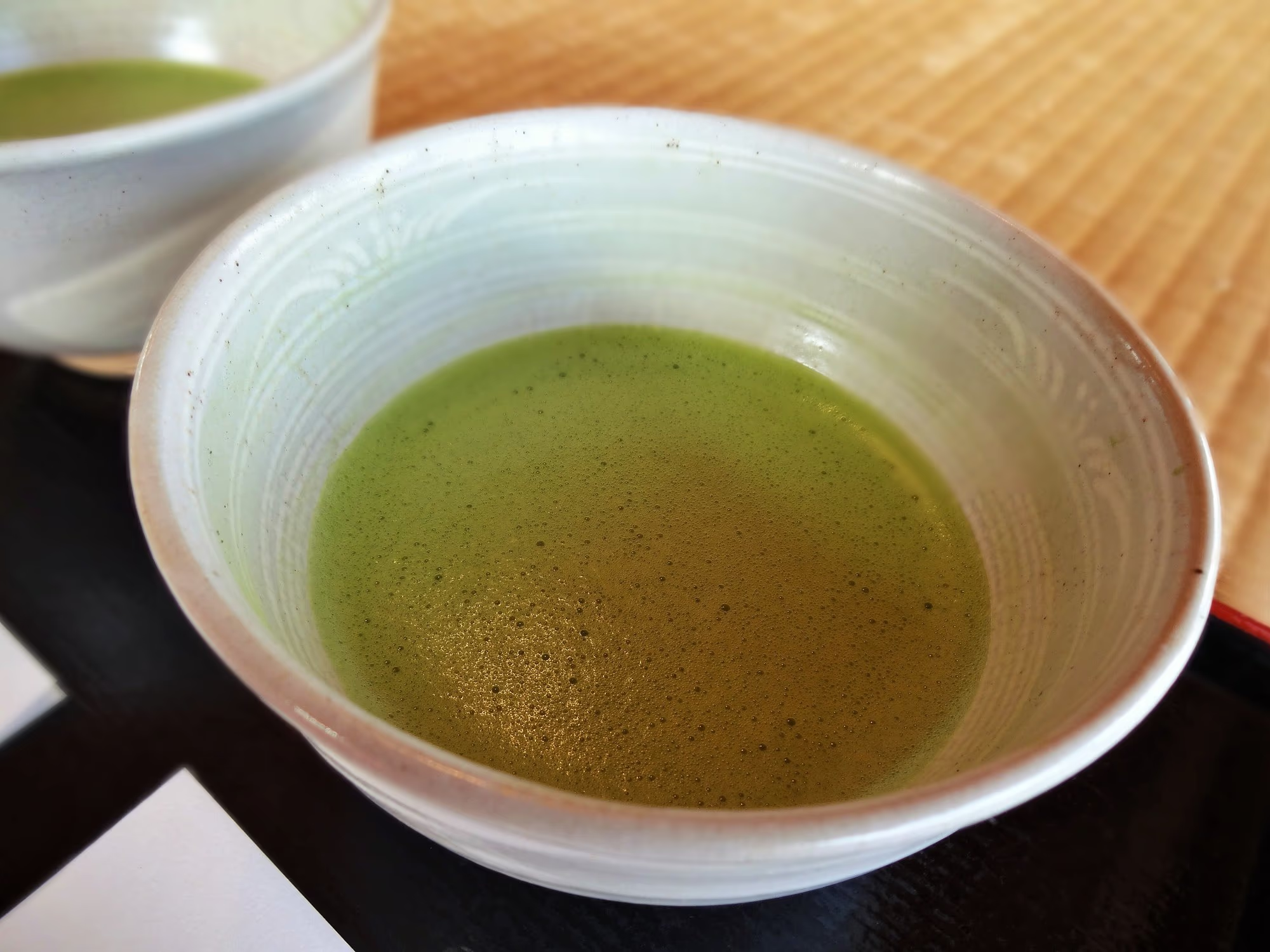
There are two ways to approach matcha in Shibuya, and they are aiming at different things. Confuse them and the session will not be what you expected.
The two products
Matcha workshop (45 minutes) — You use a bowl, whisk and scoop to make your own matcha. The point is the technique. Shizuoka matcha and Japanese sweets are provided. At 45 minutes it fits between other plans.
Tea ceremony — A tea master walks you through the sequence and the thinking behind it: how the utensils are handled, the pacing, the relationship between host and guest. The Shibuya listing shows 5.0 from 76 reviews and more than 1,000 bookings.
Both run in English and both include sweets.
Which to choose
| Matcha workshop | Tea ceremony | |
|---|---|---|
| Aim | Learn to whisk | Understand the form |
| Duration | 45 min | See listing |
| Posture | Mostly standing or seated on chairs | Includes seiza |
| Hands-on | High | Moderate |
| Suits | People who will make it at home | People interested in the culture |
| With children | Reasonably suitable | Check age conditions |
If you want to make matcha at home, take the workshop. Matcha travels well as a souvenir, and knowing the technique gives it a purpose.
If you are interested in Japanese culture itself, take the ceremony. Once you understand that every gesture has a reason, shrines and gardens later in your trip look different too.
Making better matcha, at home
Most of what you learn is reproducible.
Water temperature — Boiling water brings out bitterness. Slightly cooled water, roughly 70–80°C, gives you more of the savoury character.
Whisk motion — Not a circle. Move the whisk back and forth in a “W” or “M” pattern, using your wrist rather than your arm. That is what creates the foam.
Sweet first — Eat the wagashi, then drink. That sequence is the design of the pairing; reversed, only the bitterness registers.
Drink it — The quantity is small. Two or three mouthfuls and it is finished.
In the tea room
A few things make a ceremony easier to be part of.
- Avoid strong scents — perfume and hair products interfere with the aroma of the tea
- Remove watches and rings — to protect the bowls. You may be asked to
- Hold the bowl with both hands — never one. Why you turn it before drinking is explained on the day
- Ask before photographing — some moments are open to it and some are not
None of this is decoration. It exists to protect the utensils and the setting.
Booking
Both are small-group formats, often just a few people per session, so same-day availability is scarce.
- Weekends and holidays: allow a week
- Weekdays: sometimes available a few days out
- Cherry blossom and autumn colour seasons: book early
They are indoors, so they also make a good reserve plan for a day the forecast ruins.
Why demand comes from outside the English-speaking world
Search data for Shibuya’s tea and cooking experiences shows something unusual: interest is stronger from French, German, Italian and Spanish speakers than from English speakers.
The likely reason is that tea ceremony has been introduced and written about in Europe for a long time, so “do a tea ceremony in Japan” is an established idea there.
The sessions themselves run in English, but because so much of the learning is watching and copying, language is less of a barrier than you might expect.
Building a day around it
These are short, so several culture sessions fit into one day.
- Morning — chopstick-making, one hour
- Lunch — eat in Shibuya
- Afternoon — matcha or tea ceremony, 45 minutes upwards
- Late afternoon — Shibuya Sky
- Evening — the sumo show or an izakaya crawl
All of it happens in central Shibuya, within walking distance.
Sources
Ratings, review counts, booking volumes, durations and the stated origin of the matcha are the values shown on each booking page on 3 September 2026, and they change. This site is not the operator of any of these experiences.