The key to Shibuya is the terrain.
Shibuya is a valley. The station sits at the bottom and the ground rises in every direction. Dōgenzaka, Miyamasuzaka, Kōen-dōri, Spain-zaka — the street names say so, and the name of the district itself contains the character for valley.
Once you know that, the way you move around changes.
A radial structure
Shibuya’s destinations fan out from the station. Learn five directions and you can plan any route.
North-west — Center-gai, SHIBUYA109, Dōgenzaka Across the Crossing. A pedestrian street dense with food and clothing, and above it the restaurants and clubs of Dōgenzaka and Maruyamachō.
North — Kōen-dōri, Shibuya Parco, the Disney Store A gentle climb. Pokémon Center and Nintendo TOKYO are on the sixth floor of Shibuya Parco.
North-east — Miyashita Park, Nonbei Yokocho Five minutes. A retail complex with a park on its roof, and a lane of post-war bars along the railway.
East — Shibuya Hikarie, Shibuya Stream A calmer customer base. Offices and retail.
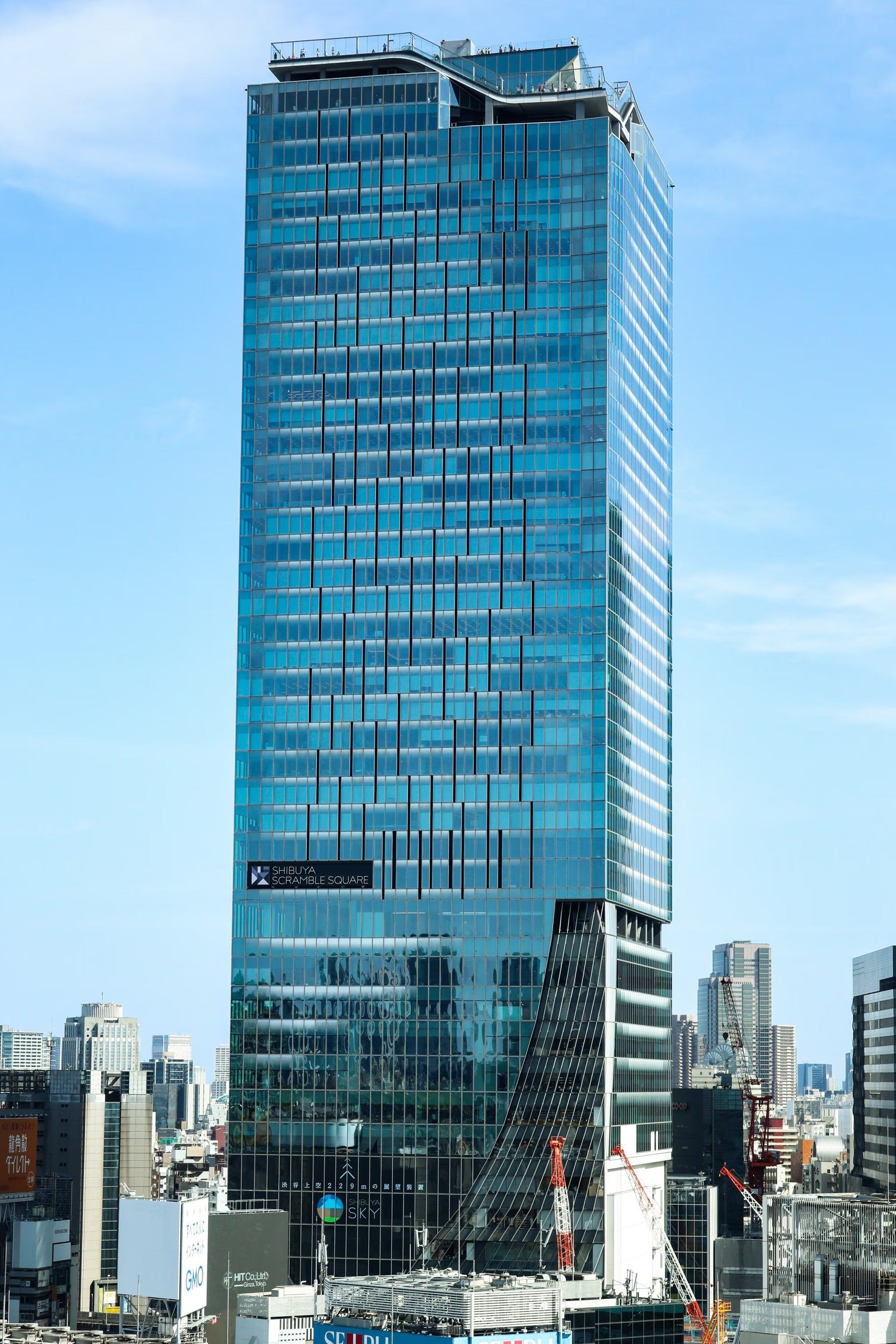
Directly above the station — Shibuya Scramble Square 46F and the roof are Shibuya Sky.
South-west — Shōtō Ten to fifteen minutes on foot. An affluent residential district with museums, where the noise of the Crossing disappears entirely.
Further north-west — Meiji Jingū, Yoyogi Park, Harajuku Fifteen to twenty minutes. Forest and quiet. See what’s near Shibuya.
What it is known for
The Scramble Crossing — Five crossings go green together and diagonals are permitted. Frequently described as the busiest pedestrian crossing in the world, and used repeatedly in film and television as visual shorthand for Tokyo. → Full guide
Youth culture — From the 1970s onwards, a centre for Japanese youth fashion and music. SHIBUYA109 is the emblem of it. → Shopping
Hachikō — The statue of an Akita who kept waiting at the station for his owner. It stands at the Hachikō exit and still functions as a meeting point. → Details
Shibuya Sky — Opened in 2019 on top of Shibuya Scramble Square. 229 metres, and unlike other Tokyo decks, its top level is open to the sky. → Details
How the money works
The only things you pay for in Shibuya are observation decks and organised experiences.
Free
- The Scramble Crossing
- The Hachikō statue
- Center-gai and Kōen-dōri
- The rooftop lawn at Miyashita Park
- The station walkway, which overlooks the Crossing
- Pokémon Center and Nintendo TOKYO, to look around
- Meiji Jingū and Yoyogi Park
Paid
- Shibuya Sky, from ¥2,700
- MAG8, cheaper than Shibuya Sky, one drink included
- Street karts, sumo shows, tea ceremony, chopstick making, cooking classes
- Guided tours
So budgeting is only a matter of choosing what to pay for. Walking the district costs nothing.
See 20 things to do in Shibuya.
The district changes by the hour
| Time | What it’s like | What to do |
|---|---|---|
| 07:00–09:00 | Commuter rush; shops shut | Photograph the Crossing and Hachikō; Meiji Jingū |
| 10:00–13:00 | Open and still comfortable | Shopping, experiences, Pokémon Center |
| 13:00–16:00 | Filling up | The deck on a daytime slot, museums |
| 16:00–19:00 | Busiest | The deck at sunset, the Crossing |
| 19:00–23:00 | Neon and food | Yokocho, izakaya, the Crossing at night |
| After 23:00 | Thinner, never empty | Clubs, late-night venues |
The basic rule: weekday mornings are easiest, weekend afternoons hardest.
Shibuya City and “Shibuya”
Worth separating, because the two get confused.
Shibuya City — The administrative ward. It includes Harajuku, Yoyogi, Ebisu, Shōtō, Hiroo and Sasazuka.
Shibuya — Generally, the area around Shibuya Station.
On this site, “Shibuya” means the station area unless stated otherwise.
A district under construction
Large-scale redevelopment has been running around Shibuya Station for years and continues.
- New high-rise complexes keep opening
- Passages and exits move
- Guides and mapping data from a few years ago can be wrong
Trust the signage in front of you. This is one of the most practically important things to know about visiting Shibuya.
How to handle the station is covered in getting there.
Who Shibuya suits
A good fit if you
- Want to experience urban density itself
- Are interested in youth culture and contemporary Tokyo
- Want to cover a lot in a short time
- Intend to be out in the evening
A poor fit if you
- Want quiet and calm
- Are here mainly for traditional Japan — temples, gardens
- Dislike crowds
- Want somewhere to sit and linger
Even then, twenty minutes’ walk to Meiji Jingū or ten to Shōtō changes the conditions entirely. Shibuya becomes a different district ten minutes from the middle of it.
Sources
Terrain, administrative boundaries and station line-up are based on published information. Shibuya Sky prices come from the official Shibuya Scramble Square site, checked on 3 September 2026.
Redevelopment continues to change the district. Confirm current details on site. This is an independent visitor guide and not the official site of any venue or authority.