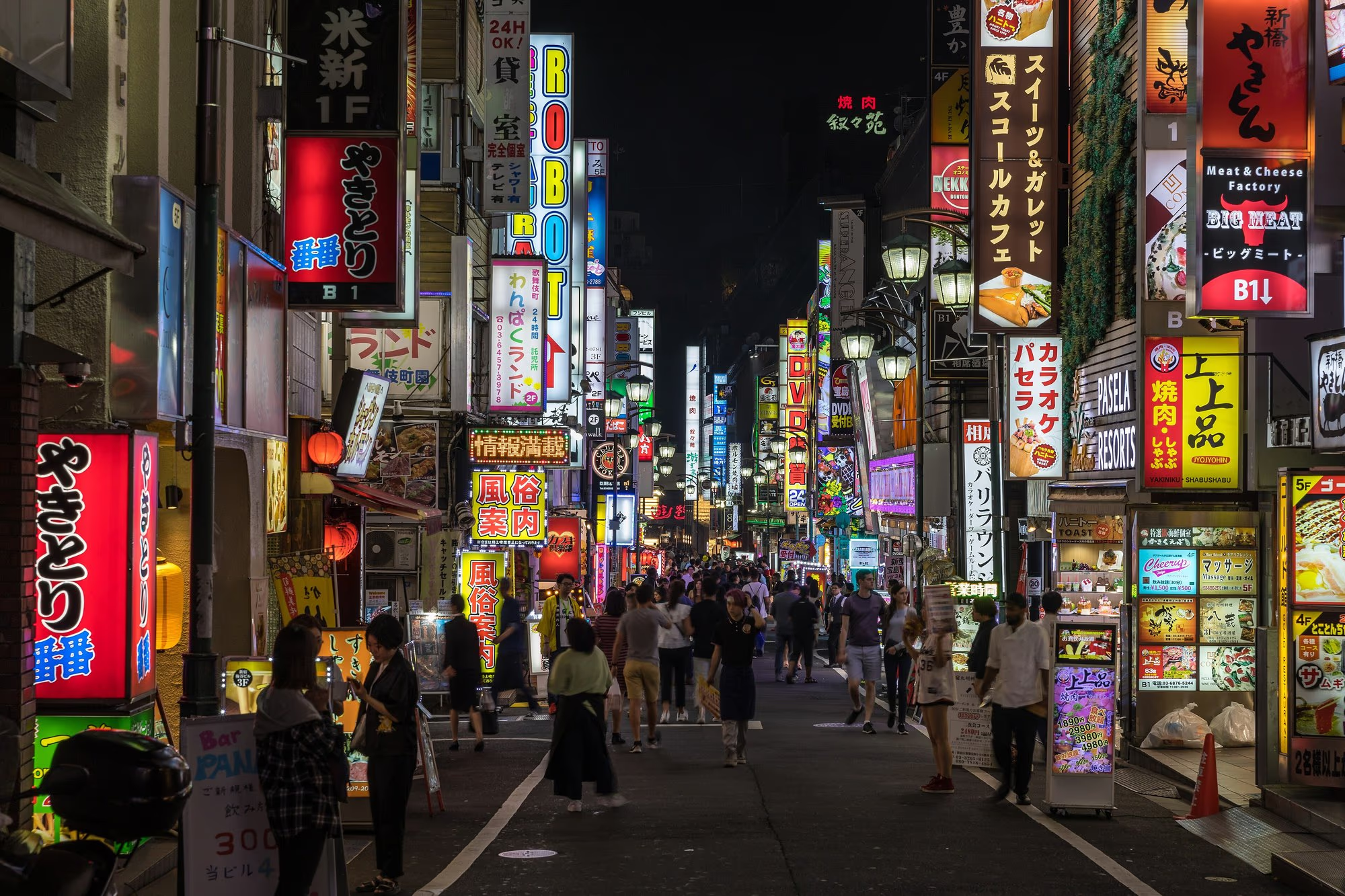
Shibuya and Shinjuku are two stops apart on the JR Yamanote line, about six minutes. As places, they have almost nothing in common.
Which one you want depends on what you intend to do.
In a sentence each
Shibuya — Young, compact, and about looking down on things. The sights sit within a ten-minute walk and half a day covers them.
Shinjuku — Broad, deep, and about drinking. It breaks into distinct sub-districts and takes time to get a handle on.
Five comparisons
| Shibuya | Shinjuku | |
|---|---|---|
| Customer | Teens to thirties | All ages |
| Footprint | Ten-minute walk | Spread out |
| Observation | Shibuya Sky (paid, open-air) | Metropolitan Government Building (free, indoors) |
| Shopping | Youth fashion, independents | Department stores, electronics |
| Eating | Yokocho alleys, Center-gai | Omoide Yokocho, Golden Gai, Kabukichō |
| Night | Club culture (Maruyamachō) | Density of bars |
| Transport | Eight lines | More, and more complicated |
| Quiet | Meiji Jingū, Shōtō | Shinjuku Gyoen |
Where to stay
On a first trip to Tokyo, choose Shinjuku.
The reason is transport.
- Better airport access, with frequent limousine bus services
- A very large number of lines, so getting to other districts is easy
- Hotels at every price point
Shibuya has a pronounced youth-oriented atmosphere and foot traffic continues late into the night. That does not always suit somewhere you want to sleep.
Reasons to stay in Shibuya
- Most of your plans are in Shibuya — the deck, experiences
- You intend to walk Harajuku and Omotesandō
- You expect to be out late in Shibuya
Daytime sightseeing
Shibuya is more efficient.
Its sights are concentrated within a ten-minute walk:
- The Scramble Crossing
- The Hachikō statue
- Center-gai and SHIBUYA109
- Shibuya Parco, with the Pokémon Center and Nintendo TOKYO
- Miyashita Park
- Shibuya Sky
You spend almost nothing on travel, so half a day covers the lot.
Shinjuku’s attractions are dispersed. The Metropolitan Government Building, Shinjuku Gyoen, Kabukichō, Isetan, Omoide Yokocho — each ten to twenty minutes from the next.
Evenings
Here the split is clean.
For drinking, Shinjuku
- Omoide Yokocho — a narrow lane packed with tiny bars
- Golden Gai — over two hundred small bars
- Kabukichō — Tokyo’s largest entertainment district
The density is on a different scale. Shibuya’s Nonbei Yokocho is the same kind of place, but not the same size.
For clubs, Shibuya
Clubs cluster around Maruyamachō, and this is specifically a Shibuya strength. It is one of the centres of Japanese club culture, and neither Shinjuku nor Roppongi has the same concentration.
See Shibuya nightlife.
For a night view
- Shibuya Sky — paid. Open-air rooftop, no glass. 229 m
- Tokyo Metropolitan Government Building observatory — free. Indoors. Around 200 m
If cost is the deciding factor, the Metropolitan Government Building. Indoors, so you are looking through glass.
If photography is the deciding factor, Shibuya Sky. The rooftop is fully open with no reflections. Paid, and constrained by the two-week booking window. See Shibuya Sky tickets.
There are also tours that cover both in one evening, watching sunset from Shibuya Sky before moving to Shinjuku’s alleys, with the transfers and entry arranged.
Shopping
Shibuya — youth fashion (SHIBUYA109), distinctive select shops, character goods (Shibuya Parco 6F), vintage (behind Center-gai and towards Harajuku)
Shinjuku — department stores including Isetan, large electronics retailers, drugstores
Tax-free processing is better organised in Shinjuku’s department stores. For a single large purchase, Shinjuku; for unusual independent shops, Shibuya.
Quiet
Both have it, which surprises people.
- Shibuya — Meiji Jingū, twenty minutes on foot and free to visit; Yoyogi Park; the museums of Shōtō
- Shinjuku — Shinjuku Gyoen, which charges admission
Meiji Jingū is essentially empty just after opening. Getting from that intersection to that quiet in twenty minutes is unusual even by Tokyo standards.
By length of stay
One day only — Pick one. Shibuya for daytime efficiency, Shinjuku for an evening of eating and drinking.
Two to three days — Both, on separate days. Splitting Shibuya into daytime and Shinjuku into evening wastes travel; split by day instead.
Four days or more — Stay in Shinjuku and work through the districts, Shibuya included, one per day.
Why not both in a day
Physically it is trivial. Two stops, six minutes.
But it is still a bad idea. Both are information-dense, and doing them consecutively leaves you with a vague memory of “Tokyo’s entertainment districts” rather than two distinct places.
Split them across days and the differences stay with you.
The stations
Both are complicated, but Shinjuku Station is worse. It is cited as the world’s busiest station and the number of exits is on another scale.
Shibuya Station is also a multi-level crossing of eight lines and first-time visitors invariably get lost. See getting there.
At either station, decide your exit before you go through the barriers. Correcting it afterwards is difficult.
Sources
Journey times and line information come from the operators’ published material. Shibuya Sky prices and opening hours are from the official Shibuya Scramble Square site, checked on 3 September 2026.
For the Tokyo Metropolitan Government Building observatory’s opening status and admission, consult the Tokyo Metropolitan Government’s own information. Details at all venues change.