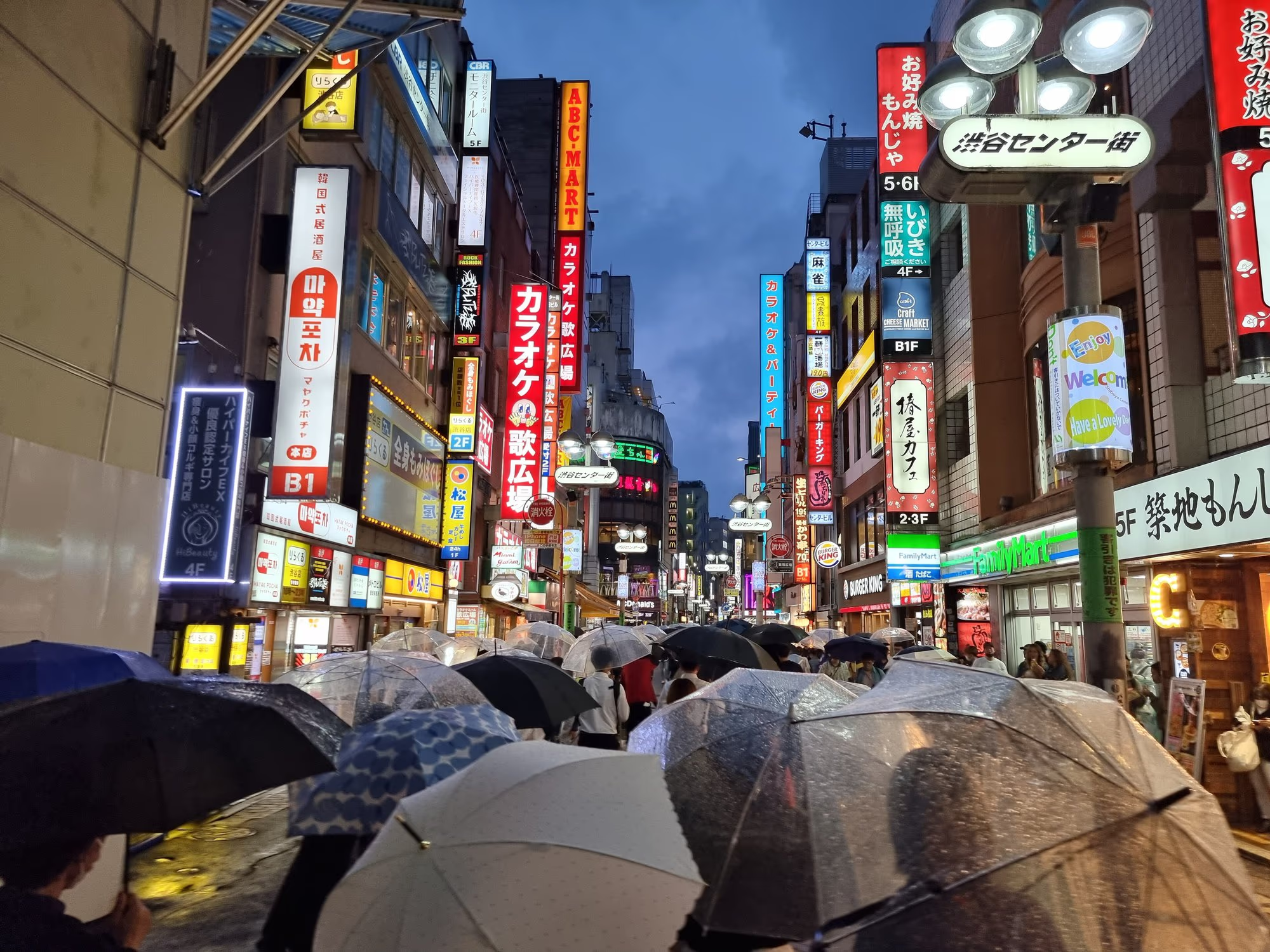
Shibuya is not an anime district. That role belongs to Akihabara and Nakano.
It keeps coming up anyway, for two separate reasons: it gets drawn constantly, and Shibuya Parco has the flagship stores. Those are different things, so take them separately.
Shibuya as a setting
Shibuya is among the most frequently depicted districts in Japanese animation, film and television. The Scramble Crossing is a visually unmistakable landmark that functions as shorthand for “Tokyo”.
The best-known recent example is the Shibuya Incident arc of Jujutsu Kaisen. Search data shows French-speaking interest in Shibuya rising noticeably through this work in particular.
The places that appear include:
- The Scramble Crossing — the defining setting
- Shibuya Station’s underground passages — the subterranean space recurs repeatedly
- The Hachikō forecourt — adjacent to the Crossing
- The elevated railway and pedestrian bridges around the station
The important point is that all of these are ordinary public space. No monument, no exhibit. Free to anyone.
Visiting them is therefore not a matter of finding a special site. It is walking through places you have seen. Do the underground as well as the surface and the layered structure of Shibuya becomes legible.
Watch the arc first and the same intersection looks different. Go without that context and it is a busy junction.
Shibuya Parco 6F — where the shops actually are
Physically, anime and game culture in Shibuya is concentrated on the sixth floor of Shibuya Parco, where several flagship stores share one level.
Pokémon Center Shibuya — The official Pokémon store. Free entry, and you can browse without buying. See Pokémon Center Shibuya.
Nintendo TOKYO — Japan’s first directly operated Nintendo store, selling games, hardware and character merchandise.
Other brand stores — Publisher-run shops and character goods stores on the same floor. The line-up changes over time.
One loop of the floor covers everything. Not needing to move between levels is Shibuya Parco’s practical advantage.
The crowd problem
On weekends and public holidays, the Pokémon Center and Nintendo TOKYO can operate entry limits. Where timed tickets are issued, being there before opening is the only workaround.
- Weekday morning — effectively no wait
- Weekday afternoon — a short wait
- Weekends and holidays — timed tickets possible
- New release days — heavily crowded
If you have a weekday available, use the morning of it.
Shibuya vs Akihabara vs Nakano
Understanding where Shibuya sits saves you wasted effort.
| Shibuya | Akihabara | Nakano Broadway | |
|---|---|---|---|
| Character | Setting + flagship stores | Comprehensive hub | Second-hand and collectors |
| Number of shops | Few (Parco 6F) | Very many | Many, densely packed |
| New goods | Yes | Extensive | Limited |
| Rare / used | Limited | Yes | Extensive |
| Time needed | 2–3 hours | Half a day to a day | 3–4 hours |
| Pairs with | Crossing, deck, shopping | Electronics district | Second-hand bookshops |
Shibuya is somewhere you add on. If you are coming for the Crossing and the observation deck anyway, two or three hours at Parco 6F is efficient. If anime and games are the point of your trip, spend a day in Akihabara instead.
Shibuya to Akihabara is about 25 minutes on the JR Yamanote line.
Half a day
Combining locations with the rest of Shibuya:
- 10:00 Shibuya Parco 6F, straight after opening, no queue
- 12:00 Lunch on Center-gai
- 13:00 Walk the Scramble Crossing and the station underground
- 14:30 Hachikō and the surrounding area
- 15:30 SHIBUYA109 or Miyashita Park
- 17:00 Shibuya Sky for sunset
Parco first is the key move: you dodge the crowds and the rest of the route flows naturally south towards the station.
Photography
Streets and public space — Fine. Do not stop in the middle of the Crossing, and avoid shooting identifiable individuals.
Inside shops — Follow each store’s policy. Some areas and products cannot be photographed.
Inside the station — Follow the railway operators’ rules. Tripods and anything obstructing passengers are prohibited.
Sources
Store line-ups and floor information come from the venues’ own published material. Tenants and opening hours change, so check the building’s official site before visiting.
References to specific works are limited to publicly available information. This is an independent visitor guide with no connection to any work or rights holder.