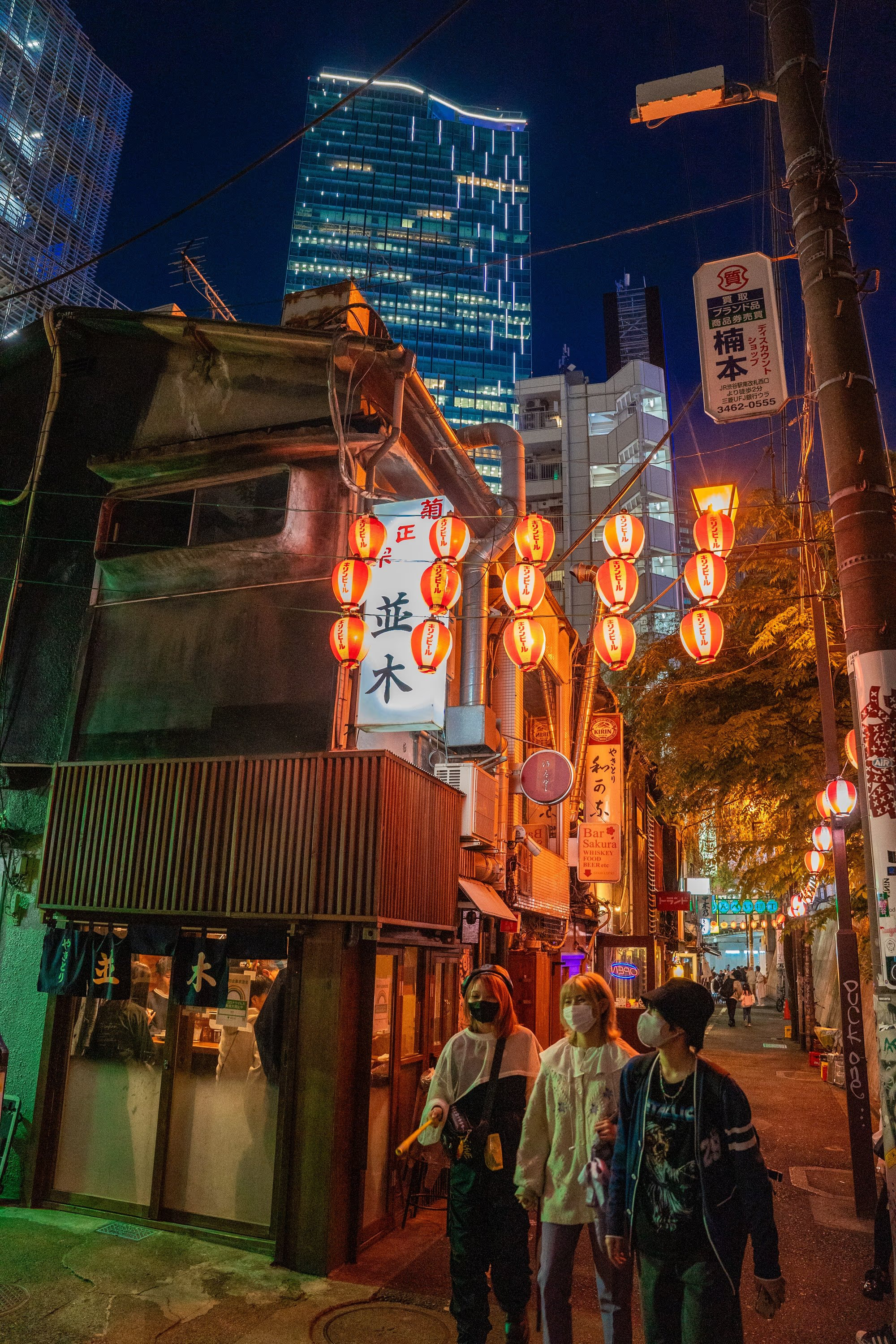
Finding somewhere to eat in Shibuya is not the problem. Choosing is.
The main streets are chains — reliable, unremarkable. Shibuya’s food becomes interesting one street back.
The eating areas
Nonbei Yokocho — A narrow lane along the JR viaduct, north-east of the station. Dozens of tiny post-war drinking places, most with a counter and a handful of stools. This is the closest thing Shibuya has to the old city.
Center-gai and its back lanes — The pedestrian street running north-west from the Crossing. The frontage is chains and large operators; one street in, independent places multiply. Prices run from student-cheap to serious.
Miyashita Park — Rooftop park above a dining complex. The food floors have a semi-outdoor, stall-like feel and are noticeably easier to walk into than the yokocho. When the alleys are full, this is where you go.
Shibuya Stream / Shibuya Scramble Square — Inside the station complexes. Clean, English menus, cards accepted. The no-risk option.
Dōgenzaka and Maruyamachō — Up the hill. Late-night food mixed with nightlife. Also the part of Shibuya with the most street touts, so stay alert.
What a guided tour is for
Shibuya food tours usually run two to three hours across three or four venues.
What the tour solves
- The curtain. Walking into a place you cannot see into is hard without an introduction
- The language. Where the menu is Japanese only, the guide orders
- Portion control. Small amounts at each stop, so you are not full after the first
- Sequence. Light to heavy, and routed to dodge the busiest rooms
What it does not solve
- You do not choose the venues
- You cannot stay somewhere you liked
- Whether food and drink are included varies by product
Shibuya’s best-known bar crawl walks Center-gai, eats at a local izakaya, drinks at a Miyashita Park bar and adds a fourth stop, over three hours. Its booking page showed 4.9 from 159 reviews and more than 1,000 bookings on 3 September 2026. Detail in the izakaya bar crawl.
Doing it yourself
Timing. Look into the yokocho before 18:00. After 19:00 it is full. Around 21:00 seats start turning over again.
Cash. Small bars may be cash only. ¥5,000 per person is a comfortable buffer; convenience-store ATMs are everywhere.
Otōshi. In an izakaya, a small dish you did not order arrives with your seat and a few hundred yen goes on the bill. It is a seating charge and a Japanese convention, not an error.
How to order. Don’t order everything at once. Two or three dishes, then see. Japanese izakaya are designed around ordering as you go.
Per venue. One or two drinks and a few dishes, then move. In places with six seats, settling in for three hours takes the place from someone else.
If you have dietary requirements
Japanese restaurants are less set up for this than their European equivalents.
Vegetarian and vegan — The trap is dashi. Even an all-vegetable dish is usually built on bonito or sardine stock. “No meat” is not enough; you need “no animal products”.
Allergies — Buckwheat, shellfish, egg, dairy and wheat are all common. Small places carry no ingredient labelling, so if the risk is serious, choose larger restaurants or somewhere you have confirmed in advance.
Halal and kosher — Few options. Research beforehand is essential.
On a guided tour, saying so at booking often means the itinerary is adjusted to venues that can cope.
Splitting the day
| Time | What works | Why |
|---|---|---|
| 11:30–14:00 | Ramen, set lunches | Fast turnover, shorter queues |
| 14:00–17:00 | Cafés, sweets | Many independents close between services |
| 17:00–19:00 | Yokocho, early | Seats still available |
| 19:00–22:00 | Izakaya, bar crawls | Peak atmosphere |
| 22:00 onwards | Late ramen, night spots | The end-of-night habit |
Between 14:00 and 17:00 many independent restaurants take a break. If you have planned to eat then, your choices narrow. Use that window for shopping or the observation deck instead.
Street drinking is restricted
Shibuya City restricts street drinking in the area around Shibuya Station. Following an amendment effective 1 October 2024, it applies year-round from 18:00 to 05:00, not only at Halloween and New Year.
Buying from a convenience store and drinking outside is covered by this. Drink inside. Details on Shibuya City’s ordinance page.
Learning to make it
Eating is one route; cooking is another. Shibuya and the surrounding area have classes in sushi, ramen, wagashi and matcha, running from 45 minutes to three hours, and what you cook becomes your meal. See cooking classes in Shibuya.
Sources
Tour ratings, review counts and booking volumes are the values shown on the booking page on 3 September 2026. For the street-drinking ordinance, consult Shibuya City’s own announcements. Budget figures are general market ranges and vary widely by venue.