Shibuya’s real strength is that it does not have to be the whole day. Four districts with entirely different characters sit within a fifteen-minute walk.
Harajuku (1 stop / 15 minutes on foot)
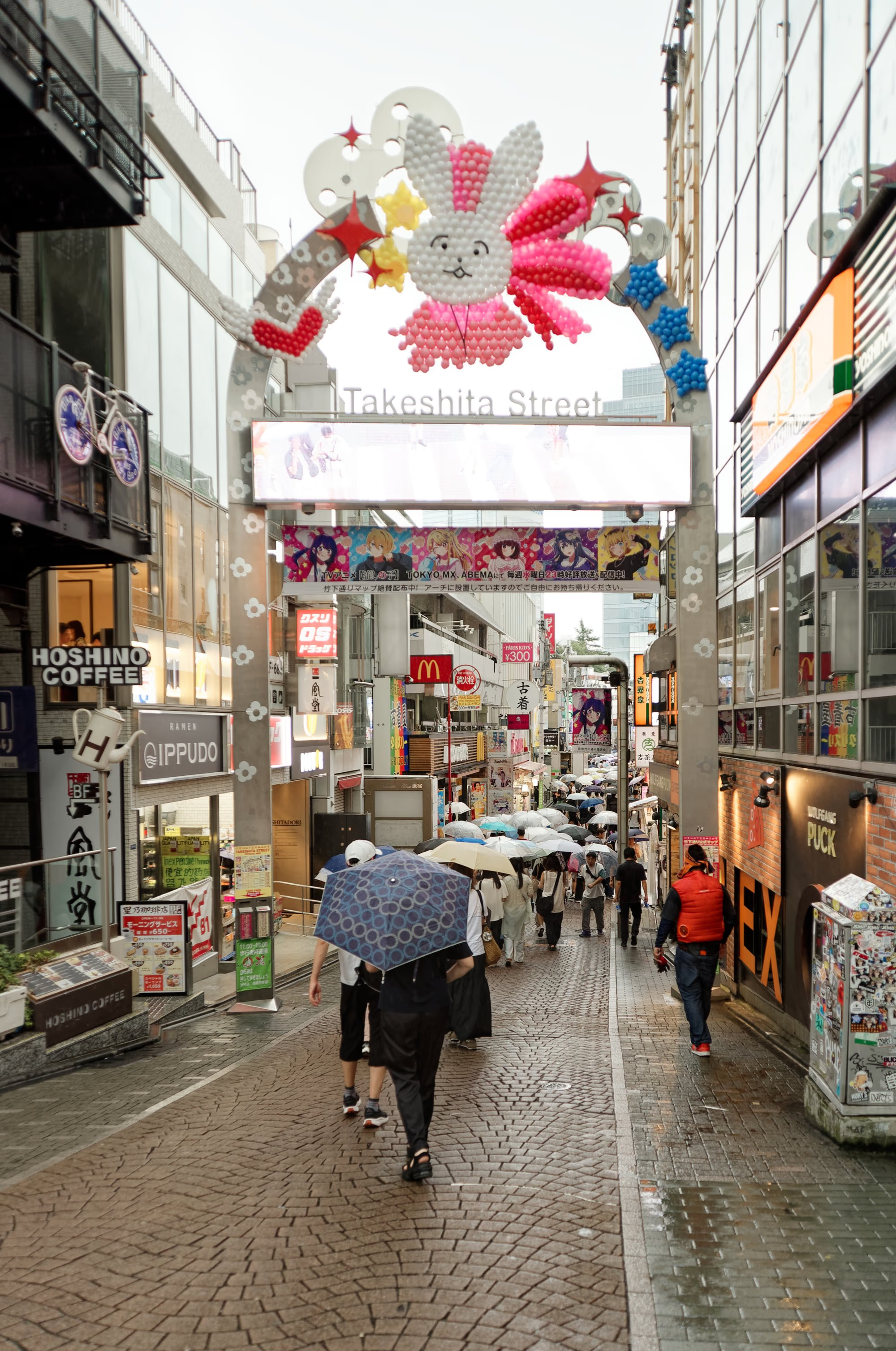
Takeshita-dōri is the centre of it. A narrow pedestrian street with shops aimed at teenagers, crêpe stands and fast fashion packed tightly together.
- Weekends are extreme. Moving forward is genuinely difficult
- Weekday mornings are perfectly walkable
- Allow thirty minutes to an hour
Behind it, Ura-Harajuku holds vintage shops and select stores. Calmer than the main street and more rewarding if buying is the point.
JR Harajuku Station adjoins the entrance to Meiji Jingū, so combining a shrine visit with this is the efficient move.
Omotesandō (15 minutes on foot)
The tree-lined avenue running east from Harajuku. The opposite of Takeshita-dōri in both customer and price.
- Luxury flagship stores line it
- The architecture is the attraction: several buildings by internationally known architects sit within a few hundred metres
- Wide pavements, so even when busy it is comfortable
Walking the avenue is worth doing whether or not you buy anything, particularly in summer greenery or during winter illuminations.
Turn off into Minami-Aoyama and the shops and galleries get quieter still.
Meiji Jingū and Yoyogi Park (15–20 minutes on foot)
The nearest quiet to Shibuya.
- Meiji Jingū — roughly 70 hectares of forest. Free. Opens at sunrise, closes at sunset
- Yoyogi Park — wide lawns. Free. Events at weekends
Meiji Jingū is essentially empty just after opening. The same path is full of groups by eleven. It is the one thing in Shibuya worth an early start.
See shrines near Shibuya.
Ebisu (1 stop, 2 minutes)
One stop south on the Yamanote line, and the register changes.
- Restaurants are of a higher standard
- Ebisu Garden Place holds the Tokyo Photographic Art Museum
- There is also a facility devoted to the history of beer
If Shibuya’s night feels too loud, move to Ebisu. Same travel distance, distinctly different clientele and price point. It is the answer on an evening you want to eat properly.
Naka-Meguro (1 stop, Tōyoko line)
Independent cafés, bookshops and homeware line the canal.
During cherry blossom season, roughly late March to early April, it is one of the most crowded places in Japan, with evening illuminations adding to it.
Outside that window it is quiet. If independent shops are the point, avoid blossom season rather than seeking it.
Shinjuku (2 stops, 6 minutes)
Six minutes on the Yamanote line, and a bigger entertainment district than Shibuya.
- More restaurants outright
- Omoide Yokocho and Golden Gai are dense drinking quarters
- Shinjuku Gyoen is a large garden
Doing Shibuya and Shinjuku on the same day is not recommended. Both carry a lot of information and the impressions merge. Split them across days.
See Shibuya or Shinjuku.
A day built around Shibuya
- 08:00 Meiji Jingū at opening, empty
- 09:30 Through Yoyogi Park to Harajuku
- 10:30 Takeshita-dōri, still manageable at this hour
- 11:30 Vintage shops in Ura-Harajuku
- 12:30 Lunch on Omotesandō
- 14:00 The avenue and its architecture
- 15:30 Back to Shibuya
- 17:00 Shibuya Sky for sunset
- 19:00 Dinner in Shibuya or Ebisu
All on foot plus one JR stop. Total walking is six to eight kilometres, so wear something you can cover that distance in.
Choosing by purpose
| What you want | Where |
|---|---|
| Youth culture, fast fashion | Harajuku (Takeshita-dōri) |
| Vintage and select shops | Ura-Harajuku |
| Luxury brands, architecture | Omotesandō, Minami-Aoyama |
| Quiet and greenery | Meiji Jingū, Yoyogi Park |
| A proper dinner | Ebisu |
| Independent shops and cafés | Naka-Meguro |
| A large entertainment district | Shinjuku |
| The Crossing, decks, youth culture | Shibuya |
What Shibuya lacks is visible in that list: quiet, luxury, calm dining. All of it available within a walk or one stop.
Getting between them
JR Yamanote line, from Shibuya
- Harajuku: 1 stop, about 2 minutes
- Ebisu: 1 stop, about 2 minutes
- Shinjuku: 2 stops, about 6 minutes
Tōkyū Tōyoko line, from Shibuya
- Naka-Meguro: 1 stop
On foot
- Omotesandō: about 15 minutes, gently uphill
- Meiji Jingū entrance: about 20 minutes
- Yoyogi Park: about 15 minutes
The terrain is hilly, so it is more tiring than a flat map suggests. See getting there.
Seeing it at road level
An open-top double-decker bus operates routes around Shibuya, including a Shibuya–Shinjuku Kabukichō service with multilingual audio.
Inefficient as transport, but passing through the district at road level is a perspective you cannot get on foot or from a deck.
Sources
Journey times and distances are approximate, and rail times are based on the operators’ published information. Shops and facilities in each district change, so check before visiting.